🛌 Save that doona!
Weighted blankets are designed to be comforting, calming, and long-lasting, but they’re also one of the most confusing items in the laundry room. Many people treat them like a regular duvet or throw blanket, only to end up with a washer that struggles, a blanket that dries unevenly, or filling that clumps and shifts.
The good news is that most weighted blankets can be washed. The less obvious part is that how you wash one depends heavily on what it’s made of, how heavy it is, and whether the cover is removable. A method that works perfectly for one blanket can permanently damage another.
This guide explains how weighted blankets are constructed, which types can be machine washed, when hand-washing is safer, how to dry them properly, and how to avoid the most common mistakes that shorten their lifespan.
🧠 Why Weighted Blankets Need Special Care
Weighted blankets are not just heavier versions of regular blankets. Their weight comes from internal fillers, most commonly glass beads, plastic pellets, or metal beads, that are sewn into pockets or channels.
This construction creates a few challenges:
- The weight puts stress on seams during washing
- Fillers can shift or clump if agitated too aggressively
- Wet weighted blankets become significantly heavier
- Drying takes longer and uneven drying can trap moisture
When a weighted blanket is washed incorrectly, the most common problems are seam tearing, bead migration, uneven weight distribution, and musty odours caused by trapped moisture. None of these issues come from washing itself, they come from using the wrong method for the blanket’s design.
Understanding the materials and weight rating of your blanket is the key to cleaning it safely.
🧺 Can You Wash Weighted Blankets at All?
Yes, most weighted blankets can be washed, but not all in the same way.
Before doing anything else, check two things:
- Whether the blanket has a removable cover
- The total weight of the blanket
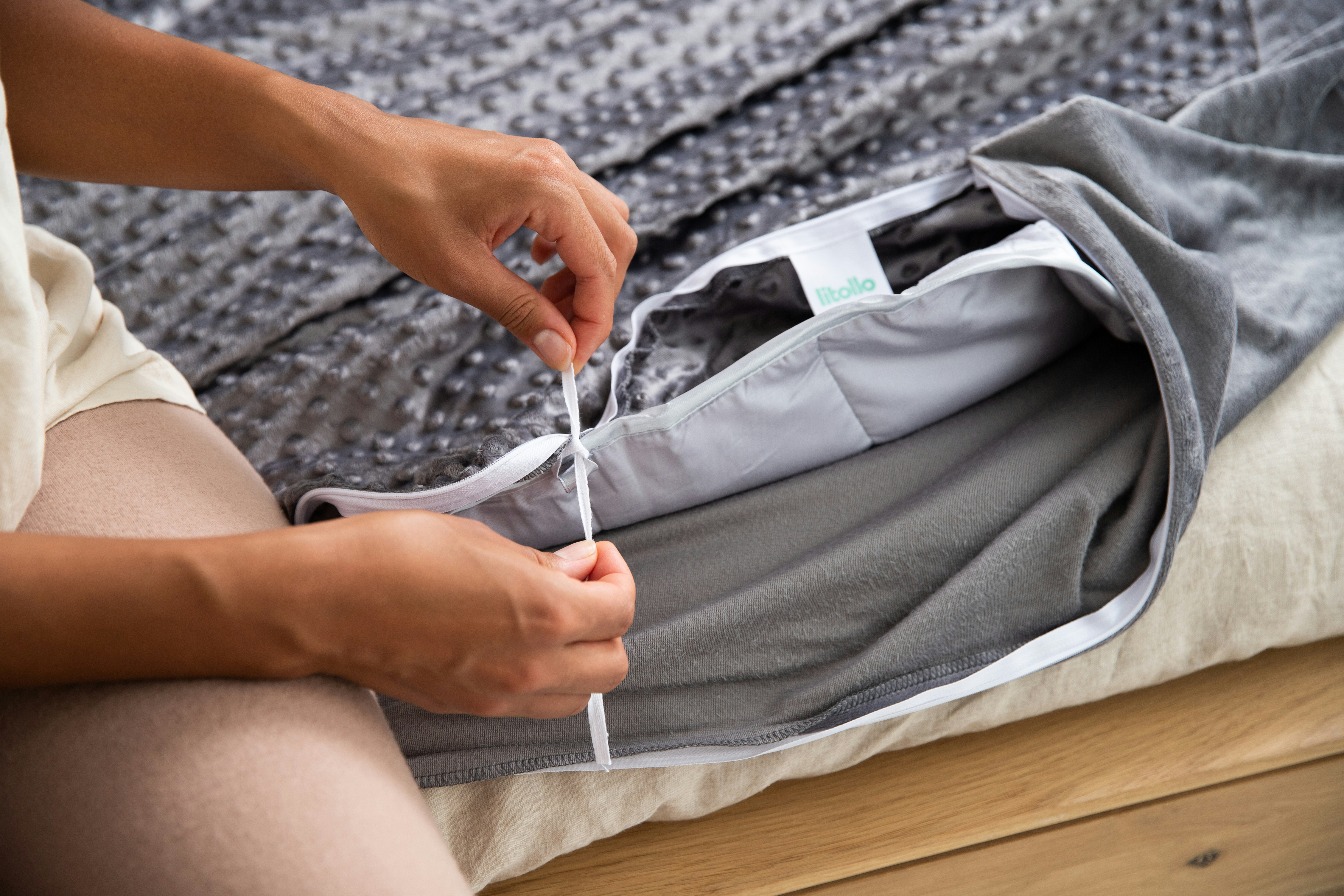
Many weighted blankets are designed with a removable duvet-style cover. In those cases, the cover should be washed regularly, while the inner weighted insert only needs occasional cleaning.
If the blanket does not have a removable cover, or if the insert itself needs cleaning, the washing method depends on the weight and materials.
🧵 What Types of Weighted Blankets Can Be Washed
✅ Generally safe to machine wash
These usually do well with care:
- Weighted blankets under 15 lb (6.8 kg)
- Cotton or polyester outer fabrics
- Blankets filled with glass beads in small stitched pockets
Use a large-capacity washer and gentle settings.
⚠️ Washable with limits or special care
These can be cleaned, but require caution:
- Blankets between 15 and 20 lb (9.07 kg)
- Minky (polyester) or plush fabrics
- Blankets with looser pocket construction
Hand-washing or professional laundering may be safer.
❌ Not ideal for home washing
These should not go in a home washer:
- Blankets over 20 lb (9.07 kg)
- Blankets with metal bead fillers
- Hand-knit or loosely stitched blankets
For these, spot cleaning or commercial machines are safer options.
🧼 How to Wash Weighted Blankets Safely
Best method for most blankets: Machine washing with care
Only use this method if your washer can handle the weight.
- Check your washer’s weight capacity
- Place the blanket evenly in the drum
- Use cold or lukewarm water
- Select a gentle or delicate cycle
- Use a small amount of mild liquid detergent
- Skip fabric softener and bleach
Cold water helps protect both fabric and stitching. Gentle cycles reduce stress on seams and internal pockets.
If the blanket feels extremely heavy once wet, stop the cycle and remove it. Overloading can damage both the blanket and the washer.
Hand-washing, safer for heavier blankets
For heavier or more delicate weighted blankets, hand-washing is often the safest option.
- Fill a bathtub with cool to lukewarm water
- Add a small amount of mild detergent
- Submerge the blanket and press gently
- Let it soak for 15 to 30 minutes
- Gently move the blanket to release dirt
- Drain and rinse with clean water
Do not twist or wring. Press water out gently instead.
Spot cleaning for small messes
For spills or isolated stains:
- Use a damp cloth with mild detergent
- Blot, do not scrub
- Rinse the area with a clean damp cloth
- Allow to air dry completely
Spot cleaning reduces how often full washing is needed.
🌬️ Drying Weighted Blankets Properly
Drying is where most damage happens, especially with heavier blankets.
Air drying, the safest method
- Lay the blanket flat on a clean surface
- Flip occasionally to promote even drying
- Ensure good airflow in the room
This takes time, typically 24 to 48 hours, but protects seams and fillers.
Tumble drying, only if allowed
If the care label allows machine drying:
- Use low heat only
- Add dryer balls to help distribute weight
- Stop periodically to reposition the blanket
Never use high heat. Heat can weaken stitching, damage fillers, and cause shrinkage.
What to avoid
- Hanging/pinning a wet weighted blanket by one edge
- Using high heat
- Leaving the blanket damp, or folded while drying
Uneven drying leads to odours and filler shifting.
⚠️ Common Problems (and How to Avoid Them)
Washer struggles or stops mid-cycle
→ Blanket is too heavy for the machine, switch to hand-washing or a commercial washer
Beads clump or shift
→ Blanket was agitated too aggressively or dried unevenly
Musty smell after drying
→ Blanket was not fully dry, increase airflow and drying time
Seams start to pull
→ Cycle was too rough or blanket was overloaded when wet
Outer fabric pills or matts
→ Avoid fabric softener and high heat
🛡️ Safety and Care Notes
Because weighted blankets are used directly against the body, basic hygiene and safety guidelines are important:
- Always dry completely before use
- Do not sleep under a damp weighted blanket
- If internal beads are leaking, stop using the blanket
- Follow the manufacturer’s care label when available
A leaking blanket can pose a choking hazard for children and pets.
🕒 How Often Should You Wash a Weighted Blanket
- Removable cover, every 1 to 2 weeks
- Inner weighted blanket, every 2 to 3 months
- Spot cleaning, as needed
Using a washable cover significantly extends the life of the weighted insert.
🧵 When Washing Is Not Enough
Weighted blankets are durable, but not indestructible.
Consider replacing the blanket if:
- Weight distribution is permanently uneven
- Beads leak or escape
- Seams continue to tear after repair
- Odours persist despite thorough drying
With proper care, many weighted blankets last several years.
✅ Bottom Line
Yes, you can wash weighted blankets, but the method matters. Light to mid-weight blankets can often be machine washed gently, heavier blankets usually do better with hand-washing or commercial machines, and drying should always be done carefully.
Check the weight, respect the materials, and focus on gentle handling. Done right, a weighted blanket stays clean, comfortable, and supportive for the long haul.
TL;DR: Weighted blankets can be washed, but not all the same way. Check the weight and materials, use cold water and gentle cycles, avoid overloading machines, dry completely, and spot clean when possible to reduce wear.
👉 Bedding care doesn’t stop with blankets.
See Can You Wash Memory Foam Pillows? for safe, foam-friendly cleaning.